Oh, if only rehab was this easy...
Oh, if only rehab was this easy…

Vocational experts seem to have gotten pretty well trampled by the recent Ogilvie I and Almaraz/Guzman I en banc decisions.  The Ogilvie II and Almaraz/Guzman II en banc decisions didn’t do them any favors either.

As far as I can tell, the WCAB1 in Ogilvie II basically flip flopped on the role of vocational experts.  Under Ogilvie I at least one very entrepreneurial vocational counselor was making money performing the Ogilvie I formula adjustments and offering to testify to support their findings.2

The Workers’ Compensation Appeals Board in Ogilvie II has very explicitly stated that vocational experts are not necessary when it comes to performing the Ogilvie I formula adjustment – since it is an objective and retrospective calculation.

This leaves open the question of whether vocational expert testimony is only relevant when defending against an Ogilvie argument.

  1. Well, eight of the commissioners anyhow. []
  2. I received more than one letter demanding agreement to a vocational counselor under Ogilvie I. []

Dont cry - you had a good run
Don't cry - you had a good run

You may not want to hear this, but Ogilvie II is probably worse for Defendants than Ogilvie I.  1  Check out page 32:

if within five years of the date of injury it later becomes clear that the employee’s individualized proportional earnings loss is significantly higher or lower than anticipated, a party may seek to reopen the issue of permanent disability by challenging the originally used DFEC adjustment factor.

I think we can expect to see a petition to reopen on any case that settled prior to 2/3/2009. 2

  1. Photo courtesy of Lawrence Whittmore []
  2. February 3, 2009 is the day Ogilvie I came out. []

Ogilvie and Almaraz/Guzman - lets cut to the chase
Ogilvie and Almaraz/Guzman - let's cut to the chase

First off, if you haven’t already downloaded Ogilvie II and Almaraz/Guzman II, do so now!

As I mentioned previously, each of these cases is about 50 pages long, so there is clearly no substitute for reading them for yourself.  However, here’s Ogilvie II and Almaraz/Guzman II in five sentences:1

  • Ogilvie v. WCAB II:
    • The WCAB ruled the original Ogilvie (I) formula is still valid.
    • The WCAB appears to have created a right to reopen a case for “individualized proportional earnings loss.”
    • Vocational testimony is not an appropriate way to dispute the DFEC portion of the 2005 Permanent Disability Rating Schedule.
    • (Bonus Dissent Summary: The lone dissent by Caplane says that vocational testimony should be considered proper rebuttal to an entire permanent disability rating.)
  • Almaraz/Guzman II:
    • The WCAB ruled that a doctor must issue reports within the “four corners” of the AMA Guides 5th Edition to comply with Labor Code Section 4660(c). 2
    • However, either party may obtain rebuttal evidence in the form of supplemental reports and depositions regarding the use of any other chapter, method, or table within the AMA Guides.
    • (Bonus Dissent Summary:  The dissenting opinion from Brass, Caplane, and Moresi says they would affirm their decision in Almaraz/Guzman I.)

What do these cases mean for the practitioner?

  • The WCAB has created a new right to reopen for a higher than expected “individualized proportional earnings loss.”
  • The Ogilvie Mathematical Proof of 18 Point Add-Ons still stands.
  • I see even more doctor depositions in my future.
  • My phone is going to be ringing off the hook tomorrow.
  1. Photo courtesy of Scallop Holden []
  2. Here, the phrase “four corners of the AMA Guides” just means the parties are restricted to the actual text of the AMA Guides and cannot use analogies and evidence from outside the AMA Guides. []

The Board is back!
The Board is back!

Need a FREE sample Ogilvie analysis brief complete with citations?

The Workers’ Compensation Appeals Board is back with their en banc decisions on Ogilvie and Almaraz/Guzman after reconsideration1  Download the Ogilvie/Almaraz/Guzman decisions all in one place:

Each of these four is about 50 pages.  Read them carefully, there will be a test later.

  1. Photo courtesy of arturodonate []

Happy Birthday PDRater!

I’ve been so busy lately I completely forgot to mention PDRater’s second birthday!1

This site was launched on July 23, 2007.  For both of you who were using it back then, you remember it was an ugly ugly baby.

I’ve really enjoyed working on this website for the last two years.  I use the word “work,” but I don’t really mean it.  Building calculators, creating charts, and unraveling the mysteries of Ogilvie are my hobbies too.  :)

What would you like to see from this website in the coming year?  Please let me know in the comments or send me an e-mail.  I already have several (more) new calculators in the pipeline, but I’m always open to ideas.

  1. Photo courtesy of rmansoorian []

lincolnblues
Even this guy can do the Ogilvie adjustment calculation in his head

If you’re using my Ogilvie calculator for situations involving a 100% earnings loss, you’re working too hard1

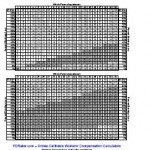
If you have 100% earnings loss and WPI less than 45, the Ogilvie adjustment formula will always result in WPI + 18.

Not to worry.  I can make Ogilvie even easier:

  1. [Download not found].
  2. [Download not found]!

The Ogilvie mathematical proof has been available for several weeks for peer review.  I’ve only received positive feedback.2  The above Ogilvie Adjustment Chart has been testing by myself and other workers’ compensation attorneys, but like everything else on this site is provided subject to all legal disclaimers.

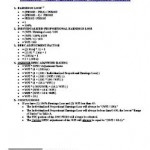
Here’s a peek at what they look like:

Ogilvie Mathematical Proof

Ogilvie Adjustment Chart
  1. Photo courtesy of lincolnblues []
  2. An anonymous source from the DWC actually called it “cool”! []

I think we can dispense with the caption, just this once...

A defense attorney friend of mine called me up yesterday to say (I’m paraphrasing here), “You jackass.  Thanks to your Ogilvie proof every Applicant’s attorney I know is calling me up, gloating, and asking for 18 points on top of the whole person impairment on every case!  Why the hell did you do that???”1   My first thought was of my favorite quote from Swingers.2 What I actually said was something along the lines of:

For the moment, let’s set aside the issue of whether California’s injured workers have gotten a raw deal since SB899.  Suppose there’s an injured worker with a finger injury, stays on temporary disability for two years, and is immediately made permanent and stationary.  If instead they get a 0% WPI, they get nothing.  If they gets a 1% WPI, Ogilvie tells us this person gets a DFEC adjusted WPI of 19%.

Nearly every litigated case involves an extended period of temporary disability and a whole person impairment less than 45.4  Ogilvie effectively removes the first 18% permanent partial disability levels.

I really don’t think the WCAB intended this consequence.  Don’t get upset with me – as long as Ogilvie is the law I might as well make Ogilvie calculations easy for you, right?5

  1. Photo courtesy of giuliomarziale []
  2. Just for you Ray! []
  3. And save $129.99 in the process []
  4. Hell, a permanent irreversible coma is only a WPI of 80. []
  5. Remember, just add 18 to the WPI! []

Ogilvie for Dummies
Ogilvie for Dummies

UPDATE: DOWNLOAD THE MATHEMATICAL PROOF AS A PDF!

Get ready to stop paying people to do Ogilvie calculations, recycle your Gearheart/Gerlach handouts, and delete your Frost Excel spreadsheet.1  We’re about to go all “Beautiful Mind.”

Yesterday while at the Oakland WCAB an Applicant’s attorney mentioned he noticed an interesting trend in the Ogilvie formula. 23 He said that whenever he does an Ogilvie calculation for someone with a 100% earnings loss and a modest WPI, the WPI is always increased by 18. 4

I ran a number of test calculations on this theory and it appeared to be right.  My calculations show that up to a WPI of 44 the increase appears to always be 18.1, but the last “0.1” always gets rounded down.  However, appearing to be right just isn’t good enough for me.  And, because I am just truly that nerd, here’s the fully mathematical proof:

Let’s break down the calculations at the heart of Ogilvie:

  1. Earnings Loss56
    1. = (PIESSE – PIEA) / PIESSE
    2. = ($1.00 – $0.00) / $1.00
    3. = $1.00 / $1.00
    4. = 1
    5. = 100%
  2. Individualized Proportional Earnings Loss
    1. = (WPI / Earnings Loss) / 100
    2. = (WPI / 100% )/100
    3. = (WPI / 1) / 100
    4. = WPI / 100
    5. Thus, for any WPI less than 45 and a total loss of earnings, the Individualized Earnings Loss will always be less than 0.450 in Table A.
  3. DFEC Adjustment Factor
    1. = ([1.81/a] * .1) + 1
    2. = ( (1.81 * .1)/a) + 1
    3. = (.181/a) + 1
    4. = 1 + (.181/a)
  4. Ogilvie DFEC Adjusted Rating
    1. = WPI * DFEC Adjustment Factor
    2. = WPI * (1 + (.181/a) )
    3. = WPI * (1 + (.181 / Individualized Proportional Earnings Loss) )
    4. = WPI * (1 + (.181 / (WPI / 100) ) )
    5. = WPI * (1 + (.181 * 100 / WPI ) )
    6. = WPI * (1 + (18.1/ WPI ) )
    7. = WPI * ( (WPI/WPI) + (18.1/ WPI ) )
    8. = WPI * (WPI + 18.1/ WPI )
    9. = WPI * (WPI + 18.1/ WPI )
    10. = WPI + 18.1
  5. Conclusion
    1. If you have an Applicant with a 100% post injury earnings loss and a WPI of 44 or less, you should rebut the FEC and arrive at an adjusted WPI that is equal to the original WPI plus 18.1.

Therefore, I propose a new Ogilvie formula that will be easy for anyone to remember:

  • Step 1: If the injured worker has a 100% earnings loss and a WPI of 44 or less, add 18.1 to the WPI and round down.
  • Step 2: If the injured worker has less than 100% earnings loss or a WPI of 45 or higher, go to Step 3.
  • Step 3: For heaven’s sake, just make your life easier and use the calculators here at PDRater.com.

What do you think?  Leave a comment or drop me a line.

  1. Sorry Jeff, Mark, Mark, and Ray! []
  2. Thank you “S”!  Unfortunately, he did not want to be named. []
  3. Man, I *wish* I could take credit for this observation. []
  4. Not multiplied by 18, but an addition of 18. []
  5. PIESSE = Post Injury Earnings of Similarly Situated Employees []
  6. PIEA = Post Injury Earnings of Applicant []

Always room for guest articles at PDRater!

Emily Tincher has recently provided a vocational expert’s perspective on the Ogilvie and Almaraz/Guzman decisions.

Have you got an article on workers’ compensation you’d like to see published?  Drop me a line and let me know.1

Thanks Emily!

P.S. For those of who keeping score at home, this is my 200th post!!!  That’s 200 posts in 357 days or roughly a post every 1.7 days.

  1. Photo courtesy of Stephen Cummings []

PDRater workers compensation calculators - so easy a cat can use them!
PDRater workers' compensation calculators - so easy your cat can use them!

What’s that?  You haven’t memorized ALL of the FEC ranks to go with each of the 2005 Permanent Disability Rating Schedule body parts? 1

Why didn’t you say so?   (Actually, someone did ask for an easy way to look up the FEC ranks back on April 1).

I’ve been working on an easy way to allow a user to look up and quickly insert the FEC rank for the affected body part.  I finally got around to building it a few days ago and launched it this morning.  Please give it a shot and let me know what you think.

Here’s all you need to do to perform your very own Ogilvie calculation:

  1. Go to the permanent disability calculator page. (If you haven’t already signed up for free, this is a good time.)
  2. Click “Ogilvie” Diminished Future Earning Capacity Calculator
  3. Type in the FEC rank OR click “FEC Rank (1-8)” and click on the injured body part.  It will look up the FEC rank and insert it for you.
  4. Type in the “Whole Person Impairment”
  5. Type in the “Post Injury Earnings of Applicant”
  6. Type in the “Post Injury Earnings of Similarly Situated Employees” OR click the link to obtain some information from the EDD Labor Market Information Division (LMID) and US Department of Labor, Bureau of Labor Statistics (BLS).

If you can think of a way for me to make this calculator even easier, please let me know2

  1. You’ve only had four years, right? []
  2. Photo courtesy of Vicki’s Pics []