Maybe not THAT way

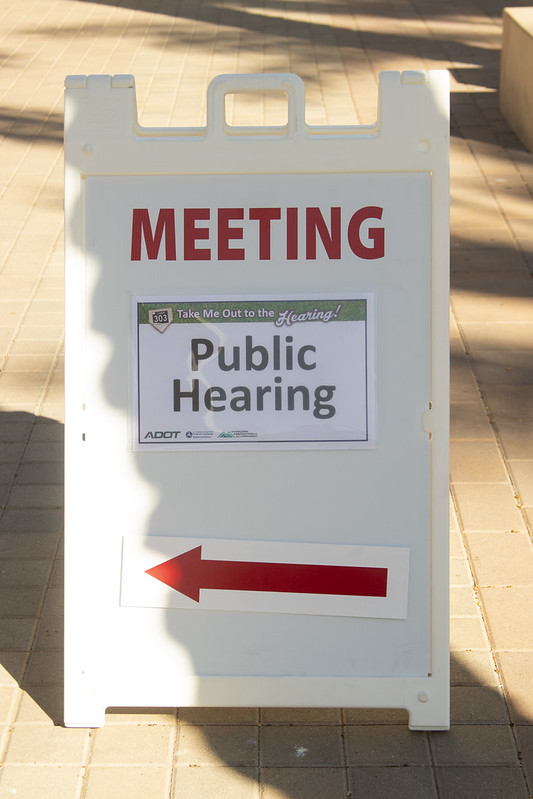
I had been looking forward to the DWC public hearing on the proposed regulations for weeks. While I didn’t get a chance to tune into the Zoom video meeting, I was able to listen to all of the public comments.

If you’ve watched the news, late night television, or tuned into any local government meetings over the last 18 months, you’re already aware there are a lot of opinions about the pandemic, the government, and the government’s response to the pandemic. Perhaps this was why I was not prepared to hear glowing unanimous support for these regulations. Every public commenter was incredibly supportive and enthusiastic about the proposed regulations relating to remote hearings.

With in-person hearings set to be implemented as soon as October 1, 2021 these changes can’t be made fast enough.

Photo courtesy of ADT

It looks like someone took a SAWW to that COLA
It looks like someone took a SAWW to that COLA!!!

You’re probably just here to download the latest workers’ compensation case about the Cost of Living Adjustment and State Average Weekly Wage increases. 12 I’m not going to hold you in suspense – here’s the download link:

[Download not found]

Obviously, you need to read the entire decision for yourself.  Here’s my oversimplification of the case:

Whenever the injured worker is due life pension payments for injuries on or after 1/1/2003, you calculate those benefits, whenever they are due, by increasing them according to the yearly increases in the state average weekly wage starting on 1/1/2004.

If some of this seems familiar, its because this is the same case as XYZZXSJO2 which came out back in February 2009.   I had suggested back in February that the effect of the COLA increases on life pension payments today would be to increase them some 44% or so.

Still having trouble understanding the impact of this case?  Well, you could try my XYZZXSJO2 calculator to tell you what the life pension rate should be during a given year.  (Remember, this just tells you the rate – it is not a commutation calculator.  These are still in the works).

What are your thoughts on Duncan v. WCAB?

http://www.flickr.com/photos/79874304@N00/386160373/
  1. Photo courtesy of Sister72 []
  2. I refuse to apologize for that pun. []

Back to the drawing board

DOWNLOAD THE MATHEMATICAL PROOF AS A PDF!

A little while ago William S. Morris, an Applicant’s attorney, told me that the Ogilvie adjustment calculation could be further simplified. 1 He suggested the following2 :

  1. Earnings Loss34
    1. L = (PIESSE – PIEA) / PIESSE
  2. Individualized Proportional Earnings Loss
    1. = (WPI / L) / 100
  3. DFEC Adjustment Factor
    1. = ([1.81/a] * .1) + 1
    2. = ( (1.81 * .1)/a) + 1
    3. = (.181/a) + 1
    4. = 1 + (.181/a)
  4. Ogilvie DFEC Adjusted Rating
    1. = WPI * DFEC Adjustment Factor
    2. = WPI * (1 + (.181/a) )
    3. = WPI * (1 + (.181 / Individualized Proportional Earnings Loss) )
    4. = WPI * (1 + (.181 / ( (WPI / L) / 100) ) )
    5. = WPI * (1 + (18.1 / ( (WPI / L)  ) )
    6. = WPI * (1 + (18.1 * (L/WPI) ) )
    7. = WPI + (18.1 * L)
  5. Conclusion
    1. If the injured workers’ individualized proportional earnings loss is outside all of the FEC ranks, you may calculate the Ogilvie adjustment by adding (18.1*Earnings Loss) to the WPI.

The only flaw with the proofs offered by William and myself is that they are too exact.  The WCAB in Ogilvie never sets forth the exact process for performing the Ogilvie adjustment calculation – so the only official method involves rounding to different significant figures at different places.  Thus, a calculation performed in strict accordance with the WCAB in Ogilvie and through one of these mathematical proofs would differ very slightly.

What do you think? Leave a comment or drop me a line.

  1. Photo courtesy of Dahveed76 []
  2. I’m paraphrasing here []
  3. PIESSE = Post Injury Earnings of Similarly Situated Employees []
  4. PIEA = Post Injury Earnings of Applicant []

Oh, if only rehab was this easy...
Oh, if only rehab was this easy…

Vocational experts seem to have gotten pretty well trampled by the recent Ogilvie I and Almaraz/Guzman I en banc decisions.  The Ogilvie II and Almaraz/Guzman II en banc decisions didn’t do them any favors either.

As far as I can tell, the WCAB1 in Ogilvie II basically flip flopped on the role of vocational experts.  Under Ogilvie I at least one very entrepreneurial vocational counselor was making money performing the Ogilvie I formula adjustments and offering to testify to support their findings.2

The Workers’ Compensation Appeals Board in Ogilvie II has very explicitly stated that vocational experts are not necessary when it comes to performing the Ogilvie I formula adjustment – since it is an objective and retrospective calculation.

This leaves open the question of whether vocational expert testimony is only relevant when defending against an Ogilvie argument.

  1. Well, eight of the commissioners anyhow. []
  2. I received more than one letter demanding agreement to a vocational counselor under Ogilvie I. []

Ogilvie and Almaraz/Guzman - lets cut to the chase
Ogilvie and Almaraz/Guzman - let's cut to the chase

First off, if you haven’t already downloaded Ogilvie II and Almaraz/Guzman II, do so now!

As I mentioned previously, each of these cases is about 50 pages long, so there is clearly no substitute for reading them for yourself.  However, here’s Ogilvie II and Almaraz/Guzman II in five sentences:1

  • Ogilvie v. WCAB II:
    • The WCAB ruled the original Ogilvie (I) formula is still valid.
    • The WCAB appears to have created a right to reopen a case for “individualized proportional earnings loss.”
    • Vocational testimony is not an appropriate way to dispute the DFEC portion of the 2005 Permanent Disability Rating Schedule.
    • (Bonus Dissent Summary: The lone dissent by Caplane says that vocational testimony should be considered proper rebuttal to an entire permanent disability rating.)
  • Almaraz/Guzman II:
    • The WCAB ruled that a doctor must issue reports within the “four corners” of the AMA Guides 5th Edition to comply with Labor Code Section 4660(c). 2
    • However, either party may obtain rebuttal evidence in the form of supplemental reports and depositions regarding the use of any other chapter, method, or table within the AMA Guides.
    • (Bonus Dissent Summary:  The dissenting opinion from Brass, Caplane, and Moresi says they would affirm their decision in Almaraz/Guzman I.)

What do these cases mean for the practitioner?

  • The WCAB has created a new right to reopen for a higher than expected “individualized proportional earnings loss.”
  • The Ogilvie Mathematical Proof of 18 Point Add-Ons still stands.
  • I see even more doctor depositions in my future.
  • My phone is going to be ringing off the hook tomorrow.
  1. Photo courtesy of Scallop Holden []
  2. Here, the phrase “four corners of the AMA Guides” just means the parties are restricted to the actual text of the AMA Guides and cannot use analogies and evidence from outside the AMA Guides. []

The Board is back!
The Board is back!

Need a FREE sample Ogilvie analysis brief complete with citations?

The Workers’ Compensation Appeals Board is back with their en banc decisions on Ogilvie and Almaraz/Guzman after reconsideration1  Download the Ogilvie/Almaraz/Guzman decisions all in one place:

Each of these four is about 50 pages.  Read them carefully, there will be a test later.

  1. Photo courtesy of arturodonate []

I think we can dispense with the caption, just this once...

A defense attorney friend of mine called me up yesterday to say (I’m paraphrasing here), “You jackass.  Thanks to your Ogilvie proof every Applicant’s attorney I know is calling me up, gloating, and asking for 18 points on top of the whole person impairment on every case!  Why the hell did you do that???”1   My first thought was of my favorite quote from Swingers.2 What I actually said was something along the lines of:

For the moment, let’s set aside the issue of whether California’s injured workers have gotten a raw deal since SB899.  Suppose there’s an injured worker with a finger injury, stays on temporary disability for two years, and is immediately made permanent and stationary.  If instead they get a 0% WPI, they get nothing.  If they gets a 1% WPI, Ogilvie tells us this person gets a DFEC adjusted WPI of 19%.

Nearly every litigated case involves an extended period of temporary disability and a whole person impairment less than 45.4  Ogilvie effectively removes the first 18% permanent partial disability levels.

I really don’t think the WCAB intended this consequence.  Don’t get upset with me – as long as Ogilvie is the law I might as well make Ogilvie calculations easy for you, right?5

  1. Photo courtesy of giuliomarziale []
  2. Just for you Ray! []
  3. And save $129.99 in the process []
  4. Hell, a permanent irreversible coma is only a WPI of 80. []
  5. Remember, just add 18 to the WPI! []

THIS is how you do an expedited hearing

I obtained two walk through settlements yesterday morning.  I’m feeling pretty good.

Oh, did I forget to mention one was in Santa Rosa and the other in Oakland?1

What has four eyes and smells like burning rubber?

Me

  1. Photo courtesy of brian.stein []

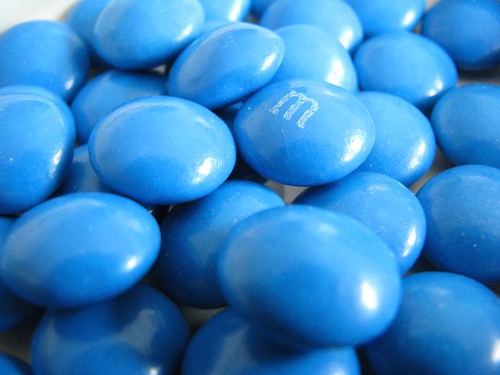
spine injury cure
Utilization Review Certified: 1 Fun Size Bag

A few weeks ago I posted about how swearing can reduce pain.1 If you thought that was unbelievable, read on:

Researchers at University of Rochester Medical Center have apparently found that the dye in blue M&M’s can lessen the secondary effects of spinal injuries.2 Those mice that received the injections of this blue dye recovered the ability to walk, and those without the injections did not.  The only side effect reported was, I kid you not, that the mice turned blue.

You can’t make this stuff up.  Anyhow, here’s the first ten jokes that occurred to me after reading that article:

  1. The blue M&M’s replaced the tan M&M’s in 1995 when it was discovered the tan ones caused spinal injuries.3
  2. Not to be outdone, Skittles researchers report their candies allow you to pee unicorns.
  3. The WCAB has now issued another en banc opinion that the office candy jar constitutes the rendering of first aid.
  4. *Disclaimer: This study was funded by The Great Pumpkin, the Easter Bunny, and the Mars Corporation.
  5. It has now been discovered that the members of the Blue Man Group are impervious to spinal injuries.
  6. …and that’s why the Smurfs have the lowest workers’ compensation premiums on the Cartoon Network.
  7. Researchers also found that it was the blue dye in Viagra, not sildenafil citrate, that helped with erectile dysfunction.
  8. The legislature has amended Labor Code 4604.5(d)(1) to allow a maximum of 24 ounces of M&M’s per industrial injury.
  9. “Your honor, under Braewood v. WCAB (Bolton), Defendants must authorize the blue M&M’s in order to treat the underlying industrial condition.”
  10. The Governor has added a new ballot measure that would replace the California MPN system with a new M&M based system.

I think the last one is my favorite.  :)

  1. Photo courtesy of Daneen_vol []
  2. Via Slashdot []
  3. You remember the tan ones, don’t you? []