If you can use duct tape, you can perform an Ogilvie DFEC analysis in 5 minutes

An Ogilvie / DFEC analysis isn’t really difficult, especially when this website has a free Ogilvie / DFEC calculator.1 The problem comes when you have to prove all the math behind those calculations.  This involves “showing your work.”

The best way to “show your work” is to take the reader through each step of the Ogilvie analysis.  I’ve prepared a sample report (generated using a new service on this website) which provides a clear and easy to understand format for “showing your work.”

The steps are basically this:

  • Step 0:  2005 PDRS rating string
  • Step 1: Post-Injury Earnings of Applicant
  • Step 2: Post-Injury Earnings of Similarly Situated Employees
  • Step 3: Calculate Proportional Earnings Loss
  • Step 4: Calculate Individualized Rating to Loss Ratio
  • Step 5: Compare Individualized Rating to Loss Ratio to range of ratios for the FEC ranks

For those interested, here’s a more detailed explanation of each step in an Ogilvie / DFEC analysis.

When each step of the Ogilvie / DFEC analysis is stated clearly, the reader can see every assumption, step, and perform their own calculations to verify your conclusions.  As long as the parties agree on the numbers used in an Ogilvie / DFEC calculation, they should always arrive at the same result.

Setting forth every single step of your Ogilvie / DFEC analysis lets you to spend less time arguing about the impact of Ogilvie and more time trying to get the case settled.

  1. Photo courtesy of indigotimbre []

Back to the drawing board

DOWNLOAD THE MATHEMATICAL PROOF AS A PDF!

A little while ago William S. Morris, an Applicant’s attorney, told me that the Ogilvie adjustment calculation could be further simplified. 1 He suggested the following2 :

  1. Earnings Loss34
    1. L = (PIESSE – PIEA) / PIESSE
  2. Individualized Proportional Earnings Loss
    1. = (WPI / L) / 100
  3. DFEC Adjustment Factor
    1. = ([1.81/a] * .1) + 1
    2. = ( (1.81 * .1)/a) + 1
    3. = (.181/a) + 1
    4. = 1 + (.181/a)
  4. Ogilvie DFEC Adjusted Rating
    1. = WPI * DFEC Adjustment Factor
    2. = WPI * (1 + (.181/a) )
    3. = WPI * (1 + (.181 / Individualized Proportional Earnings Loss) )
    4. = WPI * (1 + (.181 / ( (WPI / L) / 100) ) )
    5. = WPI * (1 + (18.1 / ( (WPI / L)  ) )
    6. = WPI * (1 + (18.1 * (L/WPI) ) )
    7. = WPI + (18.1 * L)
  5. Conclusion
    1. If the injured workers’ individualized proportional earnings loss is outside all of the FEC ranks, you may calculate the Ogilvie adjustment by adding (18.1*Earnings Loss) to the WPI.

The only flaw with the proofs offered by William and myself is that they are too exact.  The WCAB in Ogilvie never sets forth the exact process for performing the Ogilvie adjustment calculation – so the only official method involves rounding to different significant figures at different places.  Thus, a calculation performed in strict accordance with the WCAB in Ogilvie and through one of these mathematical proofs would differ very slightly.

What do you think? Leave a comment or drop me a line.

  1. Photo courtesy of Dahveed76 []
  2. I’m paraphrasing here []
  3. PIESSE = Post Injury Earnings of Similarly Situated Employees []
  4. PIEA = Post Injury Earnings of Applicant []

Ogilvie and Almaraz/Guzman - lets cut to the chase
Ogilvie and Almaraz/Guzman - let's cut to the chase

First off, if you haven’t already downloaded Ogilvie II and Almaraz/Guzman II, do so now!

As I mentioned previously, each of these cases is about 50 pages long, so there is clearly no substitute for reading them for yourself.  However, here’s Ogilvie II and Almaraz/Guzman II in five sentences:1

  • Ogilvie v. WCAB II:
    • The WCAB ruled the original Ogilvie (I) formula is still valid.
    • The WCAB appears to have created a right to reopen a case for “individualized proportional earnings loss.”
    • Vocational testimony is not an appropriate way to dispute the DFEC portion of the 2005 Permanent Disability Rating Schedule.
    • (Bonus Dissent Summary: The lone dissent by Caplane says that vocational testimony should be considered proper rebuttal to an entire permanent disability rating.)
  • Almaraz/Guzman II:
    • The WCAB ruled that a doctor must issue reports within the “four corners” of the AMA Guides 5th Edition to comply with Labor Code Section 4660(c). 2
    • However, either party may obtain rebuttal evidence in the form of supplemental reports and depositions regarding the use of any other chapter, method, or table within the AMA Guides.
    • (Bonus Dissent Summary:  The dissenting opinion from Brass, Caplane, and Moresi says they would affirm their decision in Almaraz/Guzman I.)

What do these cases mean for the practitioner?

  • The WCAB has created a new right to reopen for a higher than expected “individualized proportional earnings loss.”
  • The Ogilvie Mathematical Proof of 18 Point Add-Ons still stands.
  • I see even more doctor depositions in my future.
  • My phone is going to be ringing off the hook tomorrow.
  1. Photo courtesy of Scallop Holden []
  2. Here, the phrase “four corners of the AMA Guides” just means the parties are restricted to the actual text of the AMA Guides and cannot use analogies and evidence from outside the AMA Guides. []

lincolnblues
Even this guy can do the Ogilvie adjustment calculation in his head

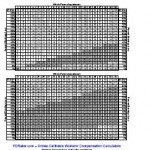
If you’re using my Ogilvie calculator for situations involving a 100% earnings loss, you’re working too hard1

If you have 100% earnings loss and WPI less than 45, the Ogilvie adjustment formula will always result in WPI + 18.

Not to worry.  I can make Ogilvie even easier:

  1. [Download not found].
  2. [Download not found]!

The Ogilvie mathematical proof has been available for several weeks for peer review.  I’ve only received positive feedback.2  The above Ogilvie Adjustment Chart has been testing by myself and other workers’ compensation attorneys, but like everything else on this site is provided subject to all legal disclaimers.

Here’s a peek at what they look like:

Ogilvie Mathematical Proof

Ogilvie Adjustment Chart
  1. Photo courtesy of lincolnblues []
  2. An anonymous source from the DWC actually called it “cool”! []

I think we can dispense with the caption, just this once...

A defense attorney friend of mine called me up yesterday to say (I’m paraphrasing here), “You jackass.  Thanks to your Ogilvie proof every Applicant’s attorney I know is calling me up, gloating, and asking for 18 points on top of the whole person impairment on every case!  Why the hell did you do that???”1   My first thought was of my favorite quote from Swingers.2 What I actually said was something along the lines of:

For the moment, let’s set aside the issue of whether California’s injured workers have gotten a raw deal since SB899.  Suppose there’s an injured worker with a finger injury, stays on temporary disability for two years, and is immediately made permanent and stationary.  If instead they get a 0% WPI, they get nothing.  If they gets a 1% WPI, Ogilvie tells us this person gets a DFEC adjusted WPI of 19%.

Nearly every litigated case involves an extended period of temporary disability and a whole person impairment less than 45.4  Ogilvie effectively removes the first 18% permanent partial disability levels.

I really don’t think the WCAB intended this consequence.  Don’t get upset with me – as long as Ogilvie is the law I might as well make Ogilvie calculations easy for you, right?5

  1. Photo courtesy of giuliomarziale []
  2. Just for you Ray! []
  3. And save $129.99 in the process []
  4. Hell, a permanent irreversible coma is only a WPI of 80. []
  5. Remember, just add 18 to the WPI! []

Always room for guest articles at PDRater!

Emily Tincher has recently provided a vocational expert’s perspective on the Ogilvie and Almaraz/Guzman decisions.

Have you got an article on workers’ compensation you’d like to see published?  Drop me a line and let me know.1

Thanks Emily!

P.S. For those of who keeping score at home, this is my 200th post!!!  That’s 200 posts in 357 days or roughly a post every 1.7 days.

  1. Photo courtesy of Stephen Cummings []

Appeal (get it?)
Appeal (get it?)

Thanks to our friends at AppealsBoardReporter.com, we now have access to 22 amicus briefs filed in the Ogilvie and Almaraz/Guzman cases. 1 In late March 2009 the WCAB granted reconsideration of their recent Ogilvie and Almaraz/Guzman decisions – and invited the submission of amicus briefs.  You can read and download them here:

Who produced them?  Well, Ogilvie amicus briefs were filed by:

  • Morrow & Morrow
  • International Association of Rehabilitation Professionals
  • The Travelers Companies Inc.
  • Insurance Commissioner Steve Poizner
  • California Workers’ Compensation Institute

The Almaraz/Guzman briefs were filed by:

  • California Applicants’ Attorneys Association
  • California Chamber of Commerce-CSAC Excess Insurance Authority
  • County of Los Angeles
  • California Self-Insured Employers Association
  • California Society of Industrial Medicine and Surgery
  • California Workers’ Compensation Institute
  • Department of Industrial Relations Director John Duncan
  • Employers Direct Insurance Company
  • Phil Walker, Esq.
  • Phil Walker, Judicial Notice Request
  • Protected Insurance Program for Schools
  • Insurance Commissioner Steve Poizner
  • Safeway Inc.-The Boeing Co.-Schools Insurance Authority
  • San Diego Schools Joint Powers Authority
  • International Association of Rehabilitation Professionals
  • Morrow & Morrow
  • The Travelers Companies Inc.

After reviewing the above list, I have to wonder: Why doesn’t CAAA have an amicus brief for Ogilvie?  Does anyone know?

  1. Photo courtesy of Black Glenn.  Terrible pun courtesy of me. []

Need more time to think about Ogilvie, Almaraz, and Guzman?
Need more time to think about Ogilvie, Almaraz/Guzman?

Sometimes even the WCAB needs more time to think.1

On March 26, 2009, the director of the Department of Industrial Relations, John C. Duncan, issued a letter to the entire Workers’ Compensation Appeals Board asking them to vacate their own decisions and solicit argument and amicus briefs.  Here’s a copy, courtesy of WCExec.com, the Letter from Director of DIR to WCAB re: Ogilvie and Almaraz/Guzman (3/26/2009).

On Monday April 6, 2009 the WCAB issued three Orders Granting Reconsideration and Order Allowing Amicus Briefs (en banc) in Ogilvie and Almaraz/Guzman.  For your review:

What does the Order Granting Reconsideration of Ogilvie and Almaraz/Guzman mean for you?

    1. Ogilvie and Almaraz/Guzman are still the law.  Despite Commissioner Aghazarian’s two concurring opinions, the WCAB did not issue a stay of either Ogilvie or Almaraz/Guzman.
    2. The WCAB has granted SCIF’s petition for reconsideration in Almaraz, granting reconsideration on their own motion in Guzman, and the parties’ petitions for reconsideration in Ogilvie.  They have granted reconsideration on these cases to, “afford us a sufficient opporutnity to study the issues.”2
    3. Any interested party may file an amicus brief no later than May 1, 2009 at 5pm.
      1. Photo courtesy of radiospike photography []
      2. Hence, the “The Thinker” reference above… []

      AMA Guides 5th Ed.
      AMA Guides 5th Ed.

      Clearly, Almaraz/Guzman has been a boon to the U.S. Postal Service.  I’ve been receiving Almaraz/Guzman letters from Applicant attorneys on my files ever since the en banc decision came out.  These letters typically fall into one of three categories:

      1. Increased demands for settlement
      2. Demands for additional discovery per Almaraz/Guzman
      3. Letters to the PQME/AME requesting their opinions on impairment outside the AMA Guidelines to the Evaluation of Permanent Impairment, Fifth Edition

      I’ve also heard of some doctors completely abandoning the AMA Guidelines to the Evaluation of Permanent Impairment, Fifth Edition, in favor of just analogizing impairment.  This is not what was intended by the en banc panel in WCAB in Almaraz/Guzman.

      Here’s what Almaraz/Guzman means for workers’ compensation practitioners:

      So, remember:

      1. Whether you agree with the AMA Guides or the 2005 PDRS they’re still the law of the land and must be addressed.
      2. Whether you agree with Almaraz/Guzman, it’s still good law and must be addressed.
      3. Almaraz/Guzman does not absolve a doctor from the responsibility to generate a medical report which addresses the AMA Guides and constitutes substantial medical evidence.

      Get your head out of the sand!
      Get your head out of the sand!

      UPDATE 9/3/2009:  Download the new en banc Ogilvie II and Almaraz/Guzman II decisions here!

      There are numerous workers’ compensation professionals who are incredibly unhappy with Ogilvie and Almaraz/Guzman.  Vocational experts are unhappy with Ogilvie, and somewhat hopeful with Almaraz/Guzman.  Impairment rating specialists are not happy with Ogilvie or Almaraz/Guzman.  These people may be unhappy with these new cases, but at least they’re starting to adapt.

      As Julius Young of WorkCompZone.com just reported, some people are dealing with Almaraz/Guzman by putting on “webinars.”  Phil Walker and Christopher Brigham have each announced “webinars.”  According to Walker’s promotional e-mail, he charges $2,000.00 to appear for a one day seminar – and now he’s giving it away for free.

      People will try to convince you that Almaraz/Guzman is not the law or “just” a WCAB decision.  Do not believe these people.  Ogilvie and Almaraz/Guzman are both en banc cases.

      En banc decisions of the Appeals Board are binding precedent on all Appeals Board panels and workers’
      compensation judges. (Cal. Code Regs., tit. 8, § 10341; City of Long Beach v. Workers’ Comp. Appeals Bd. (Garcia) (2005) 126 Cal.App.4th 298, 313, fn. 5 [70 Cal.Comp.Cases 109, 120, fn. 5]; Gee v. Workers’ Comp. Appeals Bd. (2002) 96 Cal.App.4th 1418, 1425, fn. 6 [67 Cal.Comp.Cases 236, 239, fn. 6]; see also Gov. Code, § 11425.60(b).)

      Ogilvie and Almaraz/Guzman are binding precedent on judges and the WCAB itself.  Don’t believe the hype and don’t stick your head in the sand. 1 If you argue it is not the law or not binding precedent, you will lose.  Yes, these cases may be appealed and may even be overturned.

      I think it likely they will be appealled and highly unlikely they will be overturned.

      1. Photo courtesy of blakeimeson []