I think we can dispense with the caption, just this once...

A defense attorney friend of mine called me up yesterday to say (I’m paraphrasing here), “You jackass.  Thanks to your Ogilvie proof every Applicant’s attorney I know is calling me up, gloating, and asking for 18 points on top of the whole person impairment on every case!  Why the hell did you do that???”1   My first thought was of my favorite quote from Swingers.2 What I actually said was something along the lines of:

For the moment, let’s set aside the issue of whether California’s injured workers have gotten a raw deal since SB899.  Suppose there’s an injured worker with a finger injury, stays on temporary disability for two years, and is immediately made permanent and stationary.  If instead they get a 0% WPI, they get nothing.  If they gets a 1% WPI, Ogilvie tells us this person gets a DFEC adjusted WPI of 19%.

Nearly every litigated case involves an extended period of temporary disability and a whole person impairment less than 45.4  Ogilvie effectively removes the first 18% permanent partial disability levels.

I really don’t think the WCAB intended this consequence.  Don’t get upset with me – as long as Ogilvie is the law I might as well make Ogilvie calculations easy for you, right?5

  1. Photo courtesy of giuliomarziale []
  2. Just for you Ray! []
  3. And save $129.99 in the process []
  4. Hell, a permanent irreversible coma is only a WPI of 80. []
  5. Remember, just add 18 to the WPI! []

THIS is how you do an expedited hearing

I obtained two walk through settlements yesterday morning.  I’m feeling pretty good.

Oh, did I forget to mention one was in Santa Rosa and the other in Oakland?1

What has four eyes and smells like burning rubber?

Me

  1. Photo courtesy of brian.stein []

spine injury cure
Utilization Review Certified: 1 Fun Size Bag

A few weeks ago I posted about how swearing can reduce pain.1 If you thought that was unbelievable, read on:

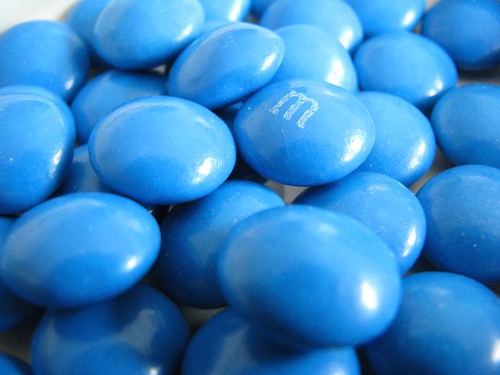
Researchers at University of Rochester Medical Center have apparently found that the dye in blue M&M’s can lessen the secondary effects of spinal injuries.2 Those mice that received the injections of this blue dye recovered the ability to walk, and those without the injections did not.  The only side effect reported was, I kid you not, that the mice turned blue.

You can’t make this stuff up.  Anyhow, here’s the first ten jokes that occurred to me after reading that article:

  1. The blue M&M’s replaced the tan M&M’s in 1995 when it was discovered the tan ones caused spinal injuries.3
  2. Not to be outdone, Skittles researchers report their candies allow you to pee unicorns.
  3. The WCAB has now issued another en banc opinion that the office candy jar constitutes the rendering of first aid.
  4. *Disclaimer: This study was funded by The Great Pumpkin, the Easter Bunny, and the Mars Corporation.
  5. It has now been discovered that the members of the Blue Man Group are impervious to spinal injuries.
  6. …and that’s why the Smurfs have the lowest workers’ compensation premiums on the Cartoon Network.
  7. Researchers also found that it was the blue dye in Viagra, not sildenafil citrate, that helped with erectile dysfunction.
  8. The legislature has amended Labor Code 4604.5(d)(1) to allow a maximum of 24 ounces of M&M’s per industrial injury.
  9. “Your honor, under Braewood v. WCAB (Bolton), Defendants must authorize the blue M&M’s in order to treat the underlying industrial condition.”
  10. The Governor has added a new ballot measure that would replace the California MPN system with a new M&M based system.

I think the last one is my favorite.  :)

  1. Photo courtesy of Daneen_vol []
  2. Via Slashdot []
  3. You remember the tan ones, don’t you? []

medical provider network maze
MPN's - a-maze-ing!

One has to wonder which would have given Kafka a bigger headache – MPN’s or voice mail message systems. 1 2  Finding a medical provider within an MPN is no walk in the park. 3

I get frustrated when I need to find a medical provider within an MPN.  If I’m very lucky, I get lost in a maze of badly laid out pages or meaningless search screens.  If I’m not so lucky the MPN website has changed, moved, or no longer exists.

Anyhow, I wanted to extend a “thank you” to all the users of this website who help me maintain my Medical Provider Network website page.  It seems like just about every week some kind person sends me a new MPN website link or updated MPN password4

  1. I think I dislike voice mail message systems more… []
  2. Photo courtesy of marcelgermain []
  3. Heck, I’m a defense attorney and I’m not crazy about Medical Provider Networks. []
  4. Once an insurance company sent me their updated MPN page! []

Ogilvie for Dummies
Ogilvie for Dummies

UPDATE: DOWNLOAD THE MATHEMATICAL PROOF AS A PDF!

Get ready to stop paying people to do Ogilvie calculations, recycle your Gearheart/Gerlach handouts, and delete your Frost Excel spreadsheet.1  We’re about to go all “Beautiful Mind.”

Yesterday while at the Oakland WCAB an Applicant’s attorney mentioned he noticed an interesting trend in the Ogilvie formula. 23 He said that whenever he does an Ogilvie calculation for someone with a 100% earnings loss and a modest WPI, the WPI is always increased by 18. 4

I ran a number of test calculations on this theory and it appeared to be right.  My calculations show that up to a WPI of 44 the increase appears to always be 18.1, but the last “0.1” always gets rounded down.  However, appearing to be right just isn’t good enough for me.  And, because I am just truly that nerd, here’s the fully mathematical proof:

Let’s break down the calculations at the heart of Ogilvie:

  1. Earnings Loss56
    1. = (PIESSE – PIEA) / PIESSE
    2. = ($1.00 – $0.00) / $1.00
    3. = $1.00 / $1.00
    4. = 1
    5. = 100%
  2. Individualized Proportional Earnings Loss
    1. = (WPI / Earnings Loss) / 100
    2. = (WPI / 100% )/100
    3. = (WPI / 1) / 100
    4. = WPI / 100
    5. Thus, for any WPI less than 45 and a total loss of earnings, the Individualized Earnings Loss will always be less than 0.450 in Table A.
  3. DFEC Adjustment Factor
    1. = ([1.81/a] * .1) + 1
    2. = ( (1.81 * .1)/a) + 1
    3. = (.181/a) + 1
    4. = 1 + (.181/a)
  4. Ogilvie DFEC Adjusted Rating
    1. = WPI * DFEC Adjustment Factor
    2. = WPI * (1 + (.181/a) )
    3. = WPI * (1 + (.181 / Individualized Proportional Earnings Loss) )
    4. = WPI * (1 + (.181 / (WPI / 100) ) )
    5. = WPI * (1 + (.181 * 100 / WPI ) )
    6. = WPI * (1 + (18.1/ WPI ) )
    7. = WPI * ( (WPI/WPI) + (18.1/ WPI ) )
    8. = WPI * (WPI + 18.1/ WPI )
    9. = WPI * (WPI + 18.1/ WPI )
    10. = WPI + 18.1
  5. Conclusion
    1. If you have an Applicant with a 100% post injury earnings loss and a WPI of 44 or less, you should rebut the FEC and arrive at an adjusted WPI that is equal to the original WPI plus 18.1.

Therefore, I propose a new Ogilvie formula that will be easy for anyone to remember:

  • Step 1: If the injured worker has a 100% earnings loss and a WPI of 44 or less, add 18.1 to the WPI and round down.
  • Step 2: If the injured worker has less than 100% earnings loss or a WPI of 45 or higher, go to Step 3.
  • Step 3: For heaven’s sake, just make your life easier and use the calculators here at PDRater.com.

What do you think?  Leave a comment or drop me a line.

  1. Sorry Jeff, Mark, Mark, and Ray! []
  2. Thank you “S”!  Unfortunately, he did not want to be named. []
  3. Man, I *wish* I could take credit for this observation. []
  4. Not multiplied by 18, but an addition of 18. []
  5. PIESSE = Post Injury Earnings of Similarly Situated Employees []
  6. PIEA = Post Injury Earnings of Applicant []