PDRater: No Bills!
PDRater: No Bills!

To this day, most of the e-mails I receive are from people asking me some variation of “No, really, how much does it cost to use these calculators? When am I going to be charged? What’s the catch?”

I intend to keep all the calculators free for anyone who cares to use them. I have built this website because I really do enjoy the hell out of blogging about tech stuff and workers’ comp law, dissecting complex workers’ compensation math formulas, and building something useful to myself and other professionals. This is quite literally how I spend my free time. I’m just that nerdy.


Getting an upgrade!
Getting an upgrade!

Late last week a user asked for a new feature.1  He wanted to be able to perform the Ogilvie DFEC rebuttal calculation and have the results e-mailed to him.2 Well, I built it!3

To e-mail yourself a calculation, perform the calculation as normal.  When the website returns your calculation, it will say “E-mail Me!”  Just click that button and it will send an e-mail to the address you used to register for this website.

However, here’s the cool part:  I’ve installed this new e-mail system into every calculator4 No more having to copy and paste!  Just click one button and your calculation will show up in your inbox!5

Although I intend this to be a paid-subscription-only feature, I am going to leave it open for all users while I get some feedback.  So, what do you think?  Please leave a comment or shoot me an e-mail!

  1. Thanks Dennis! []
  2. Photo courtesy of Vernhart []
  3. Why, what did you do with your Saturday morning? []
  4. I haven’t installed it in some of the EAMS lookup functions []
  5. If you filled in the boxes for Applicant, WCAB #, and File #, it will include this information in your e-mail as well.  This is only for your convenience and not a requirement. []

Wordpress
Wordpress

A friend of mine owns and operates a number of websites – all of which run on ASP/.NET/MS-SQL servers.  He knows what he’s talking about, but he’s fairly dismissive of WordPress, PHP, and MySQL.

All this time I’ve been raving about WordPress, telling him that you can basically do anything with it.  I’ve mentioned how easy it is to use, how easy it is to maintain, its open source, how many global corporations use WordPress to build their websites, how its the tool of choice for so many designers, and how huge the WordPress community is.

In the meantime, he’s referring to his millions of rows in his “real-SQL, MicroSoft SQL” database.  I believe he’s been stuck thinking of PHP and MySQL as “kiddie” stuff, just not ready for big time.

That is, he’s been dismissive of WordPress until about two months ago.  In the last two months other people (SEO consultants, professional designers) have been raving about WordPress to him too.

I think he’s finally coming around.

Indy 500
Indy 500

Wow!  500 registered users!

Last month I mentioned that this website had a record number of new visitors.  I honestly thought that was an anomalous one day spike in traffic.  Instead we’ve had a sustained increase in new visitors and people signing up to use the workers’ compensation calculators for free.

Since February 13, 20091 I’ve enjoyed posting about:

Ever since I relaunched this website I’ve had this idea in the back of my mind that getting to 500 users would be a big deal.  There are literally hundreds of workers’ compensation professionals who rely on this website and its calculators to make their lives a little easier.  This certainly feels like a big deal to me.

  1. When the 400th user registered. []
  2. I am keeping this calculator in beta testing until I get a little more feedback.  If you want to try it out, just drop me a line! []

XYZZXSJO2 - The motion picture!
XYZZXSJO2 - The sequel!

Last week I posted about a recent case from the San Jose WCAB that indicated a life pension SAWW1 increase is applied on the first January 1 after the date of injury.  You can find a download of the XYZZXSJO2 case here.

I’ve just finished the COLA / SAWW future life pension rate calculator to determine what the future life pension rates are assuming a COLA / SAWW increase of 4.7% per year.  If you’re interested in becoming a beta tester for this COLA / SAWW calculator for life pension increases, please drop me a line and ask for access. 2

Please keep in mind that this is not a life pension with SAWW / COLA increase commutation calculator.  The actuarial math involved in performing that calculation is … intense.

As an interesting side note, this week I saw my very first DEU commutation of a life pension with COLA increase.  Unlike the typical commutations everyone receives from the DEU, this commutation calculation was devoid of the actual methodology used.  I was pretty disappointed to find this out.

No matter!  Help beta test the new calculator by dropping me a line.  After you’ve given it a whirl, let me know what you think.

  1. SAWW means State Average Weekly Wage []
  2. If you have already helped me out as a beta tester, you already have access to this calculator. []

Workers Compensation Calculator
Workers' Compensation Calculator

I had an interesting e-mail exchange with a friend (and fellow workers’ compensation professional) the other day.1

We were discussing the impacts of Ogilvie on 2005 schedule ratings.  He had asked me whether I intended to update the 2005 permanent disability rating calculator to include FEC Ranks after the scheduled 8.  I believe he had suggested FEC Ranks 9 through 20.

I have no intention of manufacturing FEC Ranks 9 through 20 for the following reasons:

  • Maintaining Standards. The entire point of a rating schedule is to allow a standardized method for calculating disability and expressing those disability calculations.   If I invented my own FEC Rank system beyond the scheduled 1-8 Ranks, I would essentially be creating my own rating calculation system.  I’ve gone to considerable lengths to ensure that the rating strings produced by these permanent disability calculators are as standardized, recognizeable, and universal as possible.
  • FEC Ranks are Irrelevant. The FEC Rank system is a simplified method of applying DFEC adjustment factors.  When you use the FEC Rank of a particular body part to adjust the standard using the charts on pages 2-6 and 2-7 of the 2005 PDRS (permanent disability rating schedule), what you’re really doing is essentially multiplying your standard disability against the FEC adjustment factor associated with the particular FEC Rank for the body part in question.  An FEC Rank is only useful for telling you the appropriate FEC adjustment factor to apply to the standard disability.  Thus, FEC Ranks are irrelevant and FEC adjustment factors are all important.
  • Arbitrary FEC Ranks. FEC Rank 1 has an FEC adjustment factor of “1.100”.  However, using the Ogilvie DFEC rebuttal formula, it is possible to end up with very low FEC adjustment factors.  In extreme circumstances it would be possible to have a negative FEC adjustment factor.  The only way to resolve this would be to have several possible negative FEC Ranks.  Besides being somewhat silly, worrying about additional FEC Ranks2 misses the point.  If you’re using the Ogilvie DFEC rebuttal formula properly, the result will be a new FEC adjustment factor.  If you already have the FEC adjustment factor, you have no need for the FEC Rank!

When I had discussed the impact of Ogilvie earlier, I had pointed out that in some cases the resulting formula will dictate that you use a different FEC Rank than the one indicated by the affected body part.  In other cases you will need to use an entirely new FEC adjustment factor.  In order to keep the 2005 disability calculator current I will eventually have to create a way for the user to override a body part’s standard FEC Rank and specify a new FEC Rank or their own FEC adjustment factor.

I’m not in any particular rush to develop this feature since Ogilvie seems to require three years of post-injury earnings.  I doubt we’re going to see litigation begin in earnest over Ogilvie issues for another 18 to 24 months.

  1. Photo courtesy of Street Fly JZ []
  2. Both higher and lower than the normal 8 []

Combined Values Chart for the 2005 PDRS

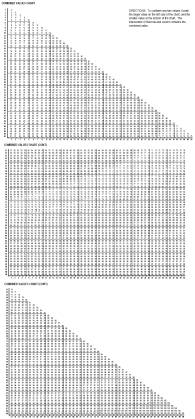
A few weeks ago I posted about the Multiple Disabilities Table for combining disabilities with injuries prior to 2005.

For injuries after 2005 we must turn to the 2005 Permanent Disability Rating Schedule.  When combining disabilities for injuries after 2005 there are several possible alternatives.  You can:

  1. In case you’re wondering, the chart on the right is a super-condensed version of the Combined Values Chart on pages 8-2 through 8-4. []
  2. Honestly, I don’t recommend this.  It wasn’t fun. []

Wordpress Upgrade
Wordpress Upgrade

I upgraded to WordPress v2.7.1 as soon as it came out (after testing on another website, of course).  I can honestly say WordPress is the only software I use that I actually look forward to upgrading.

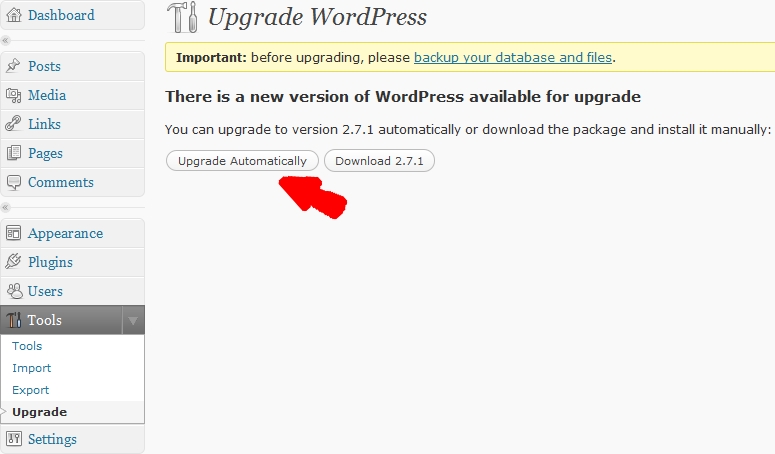
Since version 2.7 RC 1, upgrading to the next version of WordPress has been this easy:

How to Upgrade WordPress

You click “Upgrade Automatically” and wait about 5 seconds.

You’re done.

Not entirely off topic: a friend of mine asked me yesterday about the best way to put up a new website.  She had thought about using Yahoo Site Builder or some such.  Yahoo and its like are great at building free, quick, and ugly websites.  If you’re going to publish on the internets, why not just opt for something just as easy and that has hundreds, if not thousands of possible totally free themes to choose from?  I say, go with WordPress.

I used to code sites by hand – that’s a chump’s game.  Just install WordPress and call it a day.

So Many Calclators, So Little Time

After some additional testing and feedback, I have launched the Ogilvie Calculator aka DFEC Calculator aka Diminished Future Earning Capacity Calculator.1

To all of my friendly beta-testers:  Thank you!

So, what are you waiting for?  Signing up for this website is totally free and takes 30 seconds.  Log in, give it a whirl and let me know what you think.

  1. Photo courtesy of teclasorg. []

California Court of Appeals, First Appellate District

The First Appellate District of the Court of Appeal of the State of California has affirmed the Workers’ Compensation Appeals Board in Benson v. WCAB and the Permanente Medical Group, affirmed (2/10/2009).  The Court of Appeals held, in relevant part, that “[t]he Wilkinson doctrine is inconsistent with the apportionment reforms enacted by Senate Bill No. 899.”

The basic upshot is that barring “limited circumstances” each distinct industrial injury will require its own Award.

First Ogilvie and Almaraz/Guzman, now Benson?  Its been an exciting two weeks to be a Workers’ Compensation attorney.

Office of the Clerk
Office of the Clerk