Getting an upgrade!
Getting an upgrade!

Late last week a user asked for a new feature.1  He wanted to be able to perform the Ogilvie DFEC rebuttal calculation and have the results e-mailed to him.2 Well, I built it!3

To e-mail yourself a calculation, perform the calculation as normal.  When the website returns your calculation, it will say “E-mail Me!”  Just click that button and it will send an e-mail to the address you used to register for this website.

However, here’s the cool part:  I’ve installed this new e-mail system into every calculator4 No more having to copy and paste!  Just click one button and your calculation will show up in your inbox!5

Although I intend this to be a paid-subscription-only feature, I am going to leave it open for all users while I get some feedback.  So, what do you think?  Please leave a comment or shoot me an e-mail!

  1. Thanks Dennis! []
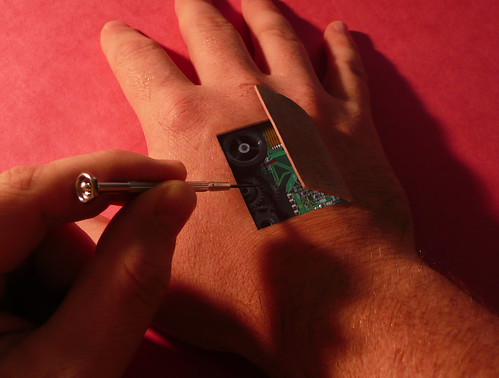
  2. Photo courtesy of Vernhart []
  3. Why, what did you do with your Saturday morning? []
  4. I haven’t installed it in some of the EAMS lookup functions []
  5. If you filled in the boxes for Applicant, WCAB #, and File #, it will include this information in your e-mail as well.  This is only for your convenience and not a requirement. []

Could THIS be the elusive Ogilvie formula?

So, here’s the deal:  I want to build the absolute most comprehensive suite of calculators and tools for workers’ compensation professionals. 1  I also want your help to making them better.

In the last few days several people have sent me questions about the Ogilvie DFEC workers’ compensation calculator:2

  1. Is it possible to get an Ogilvie DFEC adjusted whole person impairment above 100%?
    • I believe it might be theoretically possible to achieve an adjusted whole person impairment above 100% using the Ogilvie DFEC formula.  I could easily include a small variation on the calculation that would prevent it from exceeding 100, but I have not done so because I wanted to replicate the the formulas set forth in Ogilvie as exactly as possible.
  2. Why can’t I use post-injury earnings of $0.00?  What if they have no earnings at all?
    • That’s an extremely valid point.  If you try to use a post-injury earnings of “zero”, it will cause division by “zero” which is not a mathematically legal operation.  Try post-injury earnings of $1.00 or $0.01.  Doing so will give you an answer VERY close to what you need. 3
  3. When do you round each calculation when performing the Ogilvie DFEC calculation?
    • The WCAB en banc in Ogilvie rounds to three decimal places at one step and to four decimal places at a second step.  The only way we know what they actually did is by extrapolating from the examples in the decision – they never actually state “round to four significant digits here, round to three significant digits there.”  I have rounded exactly as they did in their examples.
    • At the end of the day, there are two ways to perform the Ogilvie DFEC calculation:  the exact way the WCAB did it (sometimes four, sometimes three decimal places) and the way they probably intended to do it (four decimal places until the end).  I made the judgment call to use the formula as they performed it, warts and all.
    • Why did I choose to round as the WCAB did?  I think it is more defensible to calculate exactly as the Board did, rather than as I think the Board should have calculated.
  4. How do you put the Ogilvie DFEC adjusted whole person impairment into the rating calculator?
    • At this point, you can’t use a different FEC Rank or an Ogilvie DFEC adjustment factor in the 2005 PDRS rating calculator on this site.  In order to accomodate this, I would need to either rewrite the entire calculator or write a new calculator.  One other possibility is that I could modify the Ogilvie DFEC calculation to provide one extra line of information – where it “runs the FEC numbers backwards.”
    • Let’s take this example:  Suppose the body part FEC rank is 1 and whole person impairment is 10.  The normal FEC adjusted whole person impairment would be 11.  Let’s suppose after applying the Ogilvie DFEC formula it turns out you should have an FEC rank of 8 instead.  This would give you an Ogilvie DFEC adjusted whole person impariment of 14%.  I could write a modification of the current Ogilvie DFEC calculator to put 14% into the FEC Rank chart and look up what whole person impairment you would need with an FEC rank of 1 to arrive at 14%.  Would you find this a helpful interim fix?  Please let me know by sending me an e-mail.
  5. Jay, why in the world did the Ogilvie DFEC calculator reference “standard disability”?  Shouldn’t it say “whole person impairment”?
    1. You’re totally correct.  I’ve fixed this.  Mea culpa.

Here’s my request for your help.  In order to make an Ogilvie calculation valid, you need to put in valid post-injury earnings of similarly situated employees.  The WCAB in Ogilvie suggests several possible sources:4

What do you use for post-injury earnings of similarly situated employees?  If I had a better idea where people were looking it is possible that I might be able to automate the inclusion of this informaiton as well.  Please drop me a line and let me know.   If there is a general consensus, I’ll look into the possiblity of having this informaiton automatically imported from an external website.

  1. Why?  Some people have wacky hobbies.  Maybe you build hockey arenas out of toothpicks.  I build workers’ compensation calculators and give them away for free.  If it will put you at ease, I hope to make money from advertising in the future. []
  2. Photo courtesy of nerissa’s ring []
  3. I know it has a less than friendly error message about this. I’ll see what I can do about fixing that. []
  4. I’ve copied the links directly from Ray Frost‘s Ogilvie spreadsheet/calculator.  Ray has been kind enough to allow me the use of his extensive work restrictions lists.  So, thanks Ray! []

AMA Guides 5th Ed.
AMA Guides 5th Ed.

Clearly, Almaraz/Guzman has been a boon to the U.S. Postal Service.  I’ve been receiving Almaraz/Guzman letters from Applicant attorneys on my files ever since the en banc decision came out.  These letters typically fall into one of three categories:

  1. Increased demands for settlement
  2. Demands for additional discovery per Almaraz/Guzman
  3. Letters to the PQME/AME requesting their opinions on impairment outside the AMA Guidelines to the Evaluation of Permanent Impairment, Fifth Edition

I’ve also heard of some doctors completely abandoning the AMA Guidelines to the Evaluation of Permanent Impairment, Fifth Edition, in favor of just analogizing impairment.  This is not what was intended by the en banc panel in WCAB in Almaraz/Guzman.

Here’s what Almaraz/Guzman means for workers’ compensation practitioners:

So, remember:

  1. Whether you agree with the AMA Guides or the 2005 PDRS they’re still the law of the land and must be addressed.
  2. Whether you agree with Almaraz/Guzman, it’s still good law and must be addressed.
  3. Almaraz/Guzman does not absolve a doctor from the responsibility to generate a medical report which addresses the AMA Guides and constitutes substantial medical evidence.

Get your head out of the sand!

UPDATE 9/3/2009:  Download the new en banc Ogilvie II and Almaraz/Guzman II decisions here!

There are numerous workers’ compensation professionals who are incredibly unhappy with Ogilvie and Almaraz/Guzman.  Vocational experts are unhappy with Ogilvie, and somewhat hopeful with Almaraz/Guzman.  Impairment rating specialists are not happy with Ogilvie or Almaraz/Guzman.  These people may be unhappy with these new cases, but at least they’re starting to adapt.

As Julius Young of WorkCompZone.com just reported, some people are dealing with Almaraz/Guzman by putting on “webinars.”  Phil Walker and Christopher Brigham have each announced “webinars.”  According to Walker’s promotional e-mail, he charges $2,000.00 to appear for a one day seminar – and now he’s giving it away for free.

People will try to convince you that Almaraz/Guzman is not the law or “just” a WCAB decision.  Do not believe these people.  Ogilvie and Almaraz/Guzman are both en banc cases.

En banc decisions of the Appeals Board are binding precedent on all Appeals Board panels and workers’
compensation judges. (Cal. Code Regs., tit. 8, § 10341; City of Long Beach v. Workers’ Comp. Appeals Bd. (Garcia) (2005) 126 Cal.App.4th 298, 313, fn. 5 [70 Cal.Comp.Cases 109, 120, fn. 5]; Gee v. Workers’ Comp. Appeals Bd. (2002) 96 Cal.App.4th 1418, 1425, fn. 6 [67 Cal.Comp.Cases 236, 239, fn. 6]; see also Gov. Code, § 11425.60(b).)

Ogilvie and Almaraz/Guzman are binding precedent on judges and the WCAB itself.  Don’t believe the hype and don’t stick your head in the sand. 1 If you argue it is not the law or not binding precedent, you will lose.  Yes, these cases may be appealed and may even be overturned.

I think it likely they will be appealled and highly unlikely they will be overturned.

  1. Photo courtesy of blakeimeson []

Workers Compensation Calculator
Workers' Compensation Calculator

I had an interesting e-mail exchange with a friend (and fellow workers’ compensation professional) the other day.1

We were discussing the impacts of Ogilvie on 2005 schedule ratings.  He had asked me whether I intended to update the 2005 permanent disability rating calculator to include FEC Ranks after the scheduled 8.  I believe he had suggested FEC Ranks 9 through 20.

I have no intention of manufacturing FEC Ranks 9 through 20 for the following reasons:

  • Maintaining Standards. The entire point of a rating schedule is to allow a standardized method for calculating disability and expressing those disability calculations.   If I invented my own FEC Rank system beyond the scheduled 1-8 Ranks, I would essentially be creating my own rating calculation system.  I’ve gone to considerable lengths to ensure that the rating strings produced by these permanent disability calculators are as standardized, recognizeable, and universal as possible.
  • FEC Ranks are Irrelevant. The FEC Rank system is a simplified method of applying DFEC adjustment factors.  When you use the FEC Rank of a particular body part to adjust the standard using the charts on pages 2-6 and 2-7 of the 2005 PDRS (permanent disability rating schedule), what you’re really doing is essentially multiplying your standard disability against the FEC adjustment factor associated with the particular FEC Rank for the body part in question.  An FEC Rank is only useful for telling you the appropriate FEC adjustment factor to apply to the standard disability.  Thus, FEC Ranks are irrelevant and FEC adjustment factors are all important.
  • Arbitrary FEC Ranks. FEC Rank 1 has an FEC adjustment factor of “1.100”.  However, using the Ogilvie DFEC rebuttal formula, it is possible to end up with very low FEC adjustment factors.  In extreme circumstances it would be possible to have a negative FEC adjustment factor.  The only way to resolve this would be to have several possible negative FEC Ranks.  Besides being somewhat silly, worrying about additional FEC Ranks2 misses the point.  If you’re using the Ogilvie DFEC rebuttal formula properly, the result will be a new FEC adjustment factor.  If you already have the FEC adjustment factor, you have no need for the FEC Rank!

When I had discussed the impact of Ogilvie earlier, I had pointed out that in some cases the resulting formula will dictate that you use a different FEC Rank than the one indicated by the affected body part.  In other cases you will need to use an entirely new FEC adjustment factor.  In order to keep the 2005 disability calculator current I will eventually have to create a way for the user to override a body part’s standard FEC Rank and specify a new FEC Rank or their own FEC adjustment factor.

I’m not in any particular rush to develop this feature since Ogilvie seems to require three years of post-injury earnings.  I doubt we’re going to see litigation begin in earnest over Ogilvie issues for another 18 to 24 months.

  1. Photo courtesy of Street Fly JZ []
  2. Both higher and lower than the normal 8 []

Combined Values Chart for the 2005 PDRS

A few weeks ago I posted about the Multiple Disabilities Table for combining disabilities with injuries prior to 2005.

For injuries after 2005 we must turn to the 2005 Permanent Disability Rating Schedule.  When combining disabilities for injuries after 2005 there are several possible alternatives.  You can:

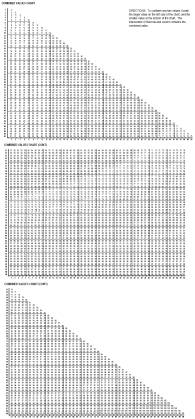
  1. In case you’re wondering, the chart on the right is a super-condensed version of the Combined Values Chart on pages 8-2 through 8-4. []
  2. Honestly, I don’t recommend this.  It wasn’t fun. []

So Many Calclators, So Little Time

After some additional testing and feedback, I have launched the Ogilvie Calculator aka DFEC Calculator aka Diminished Future Earning Capacity Calculator.1

To all of my friendly beta-testers:  Thank you!

So, what are you waiting for?  Signing up for this website is totally free and takes 30 seconds.  Log in, give it a whirl and let me know what you think.

  1. Photo courtesy of teclasorg. []

A modern hacker #1
A modern hacker #1

I launched the Ogilvie DFEC Rebuttal Calculator on Saturday morning to a select group of beta-testers. 1 When I upgraded a person’s access to the website they had no problem seeing the workers’ compensation calculator.

Unfortunately, not one of them was able to actually use the thing.  Last night my wife suggests the problem might be, “maybe they are using a different version or its not refreshed or something”?

And you know what?  She was right.  My wife, the hacker.2

I’ve written several protections into these calculators to insulate my users from having to deal with problems or bugs from newly installed code.  I would much rather a user sees nothing than get a wrong answer.  And nothing is exactly what my users saw.  I had remembered to allow my beta testers to see the Ogilvie DFEC Rebuttal Calculator – but forgot to give them access to calculator.

So, the beta-test period will continue for another day or two while I await feedback from my users.

If you’d like to see what the Ogilvie DFEC Rebuttal Calculator looks like or want to try to use it, just sign up for free and shoot me an e-mail asking for access.

  1. By “select group” I mean anyone who asked me if they could help. []
  2. Photo courtesy of gutter. []

How to build a calculator: Its like smashing a calculator - only in reverse
How to build a calculator: It's like smashing a calculator - only in reverse

I’m going to delay the launch of the Ogilvie DFEC rebuttal calculator for a day or two. 1  I believe it works just fine, but I would like to test it a little more.  This said, I will grant anyone who is interested access to this calculator.

Why the delay?  Well…

The interesting thing about taking apart a set of calculations is that you find all sorts of “hidden steps” to the calculation.  The majority in Ogilvie does a respectible job of going through the steps of this new formula and even gives several examples.

When performing most calculations one will need to round numbers at some point.  However, rounding almost invariably takes place at the very end.  In the case of the Ogilvie calculations, it appears that the WCAB rounds various figures throughout the calculation.

Even though the DFEC rebuttal calculator was giving correct answers, the fourth or fifth decimal places on some intermediary figures occasionally did not coming out right.  It took me a little while to track down all the spots where the WCAB was implicitly rounding their figures (and to what decimal place!).

I am fairly confident the calculator will work without a hitch, but I’m going to test it a little more before I make it available to the public.  If you’re interested in testing this Ogilvie DFEC rebuttal calculator, please drop me a line and let me know.

If you’re not a registered user for this website, its free to sign up and free to use all the workers’ compensation calculators.  Seriously, free as in free!

  1. Photo courtesy of mhuang []

Professor, tell me more of this DFEC rebuttal calculator...

Earlier today I installed an Ogilvie v. City and County of SF DFEC Rebuttal calculator into the free workers’ compensation calculators page on this website. 123 For the moment it is only available to people who have signed up for this website and asked to be a beta tester.  If all goes well, I’ll flip a switch and make it available to the public on Monday morning.

At the moment it requires four pieces of information:

  1. FEC Rank (re: body part in question)
  2. Standard disability (re: body part in question)
  3. Post-injury earnings for Applicant
  4. Post-injury earnings for employees similarly situated to Applicant

Once you add in that information, click “Calculate” and it should crunch through the formula and give you a response.  The WCAB in Ogilvie suggested several possible outcomes to this formula:

  • The “Individualized Loss Ratio” for the injured worker is the same or within the range for the current FEC Rank for the affected body part.  In this circumstance, the 2005 DFEC has not been rebutted.
  • The “Individualized Loss Ratio” for the injured worker is within the range of one of the other seven FEC Ranks.  Here, the DFEC portion of the 2005 Permanent Disability Rating Schedule might be rebutted.
  • The “Individualized Loss Ratio” for the injured worker is outside the range of all eight FEC Ranks.  In this circumstance, you could end up with a new FEC Adjustment Factor much higher or lower than any FEC Adjustment Factor associated with the eight FEC Ranks.  Here, the DFEC portion of the 2005 Permanent Disability Rating Schedule might be rebutted.

Obviously, there are innumerable factors that go into considerations of whether a Judge (or the WCAB) would find the DFEC portion of the 2005 Permanent Disability Rating Schedule to be rebutted.  This calculation and the information relied upon in performing this calculation cannot be taken as a guarranteed method of rebutting the DFEC portion of the 2005 Permanent Disability Rating Schedule.

If you’re not a registered user for this website, its free to sign up and free to use all the workers’ compensation calculators.  That’s right: free as in free.

  1. Photo courtesy of Draggin []
  2. I had this EXACT same calculator as a kid! []
  3. Why, how did you spend your Friday night? []